Reproductions
Click an image for all available sizes, from 8×10 paper to 32×48 Limited Edition canvas reproductions. All reproductions come with a description of the numbers and equations used to hand create them.
The reproductions listed reflect our current inventory and will ship out in a timely fashion.
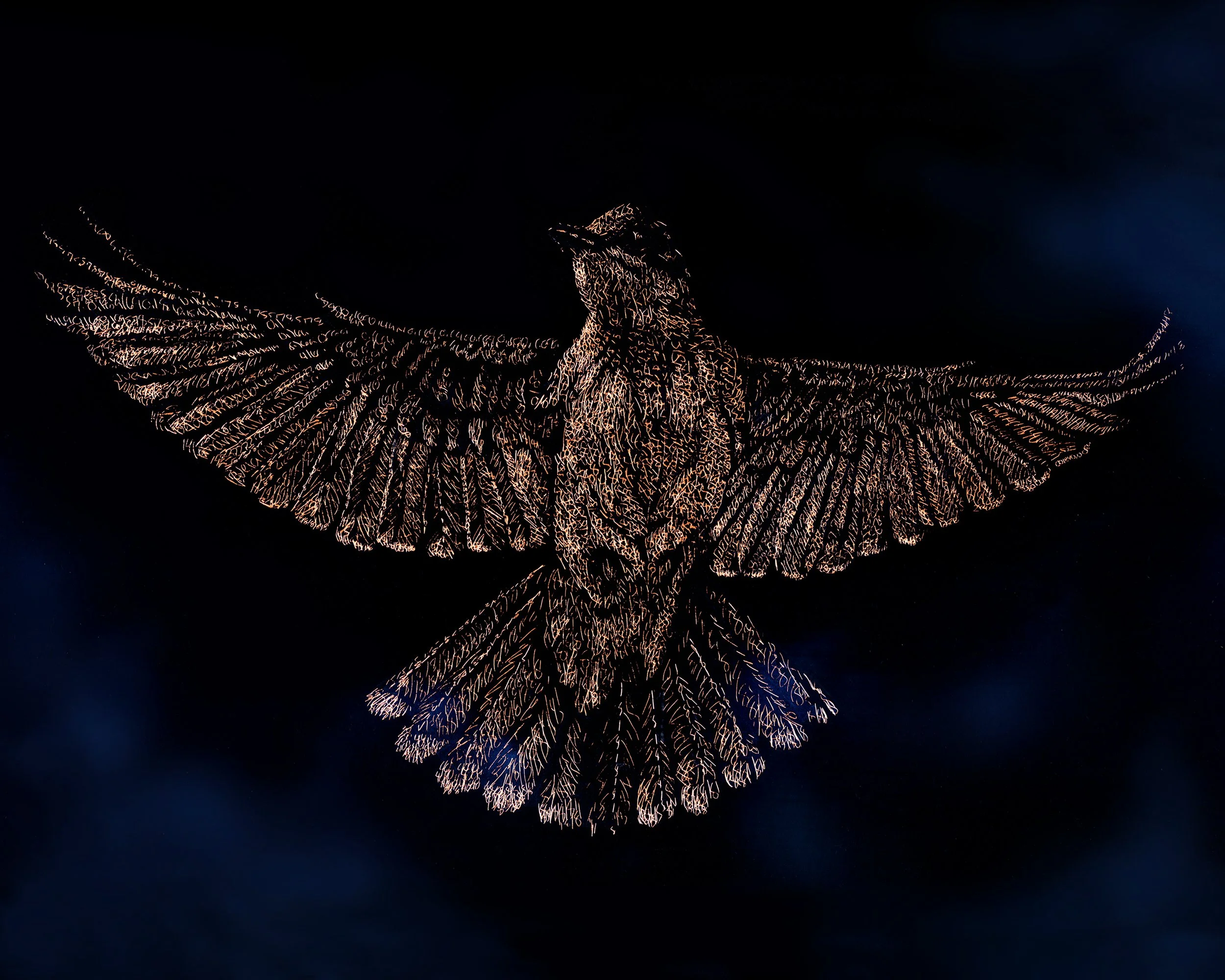
Eastern Kingbird
Eastern Kingbird
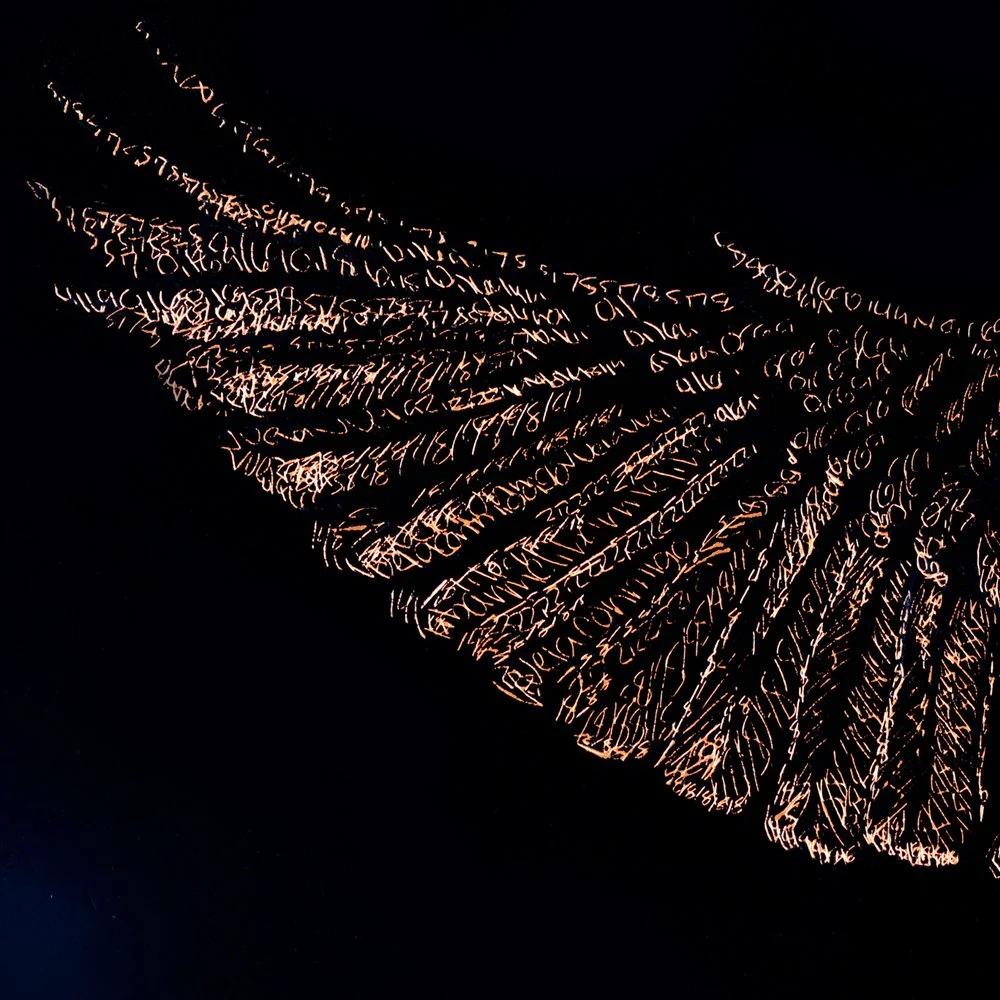
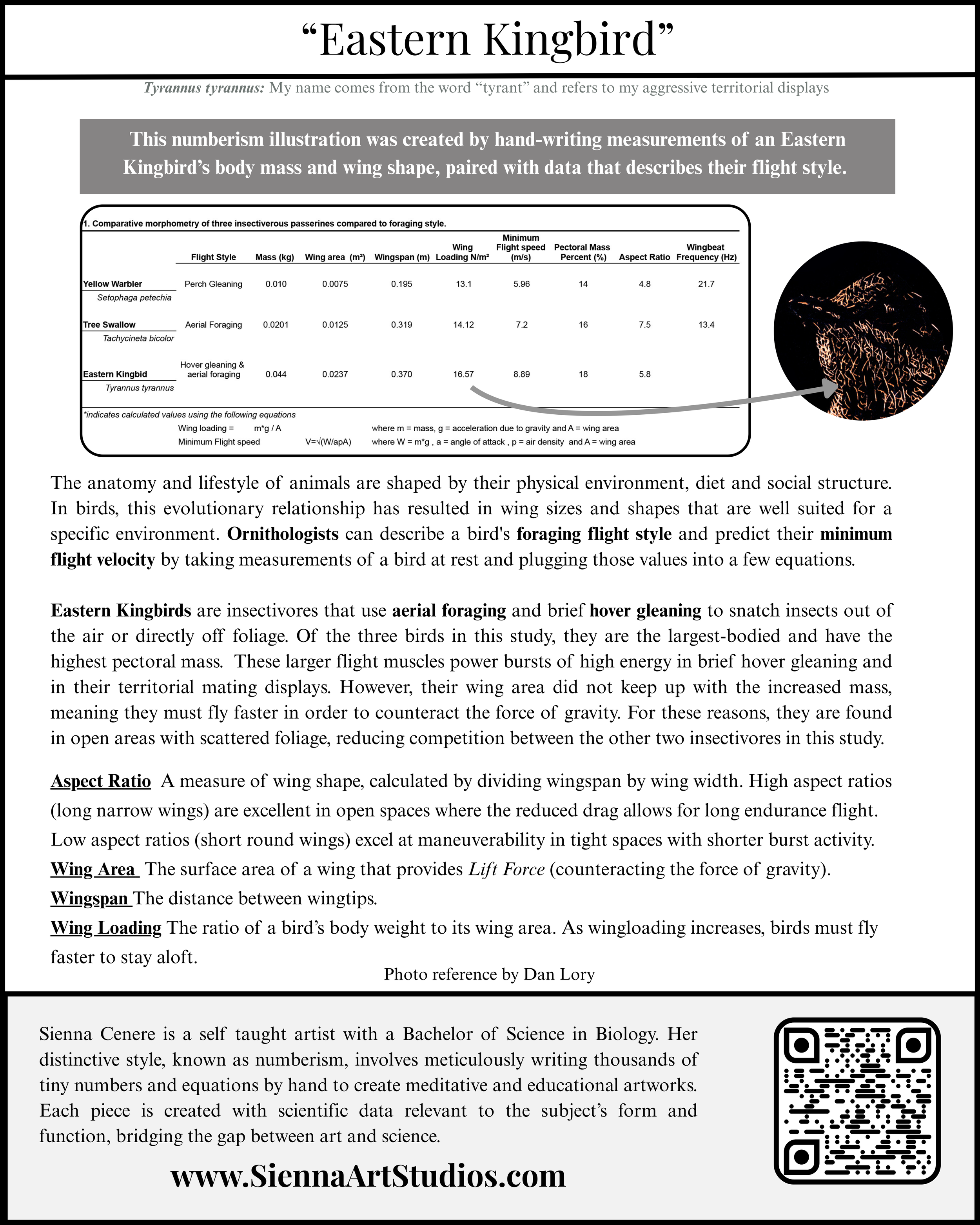
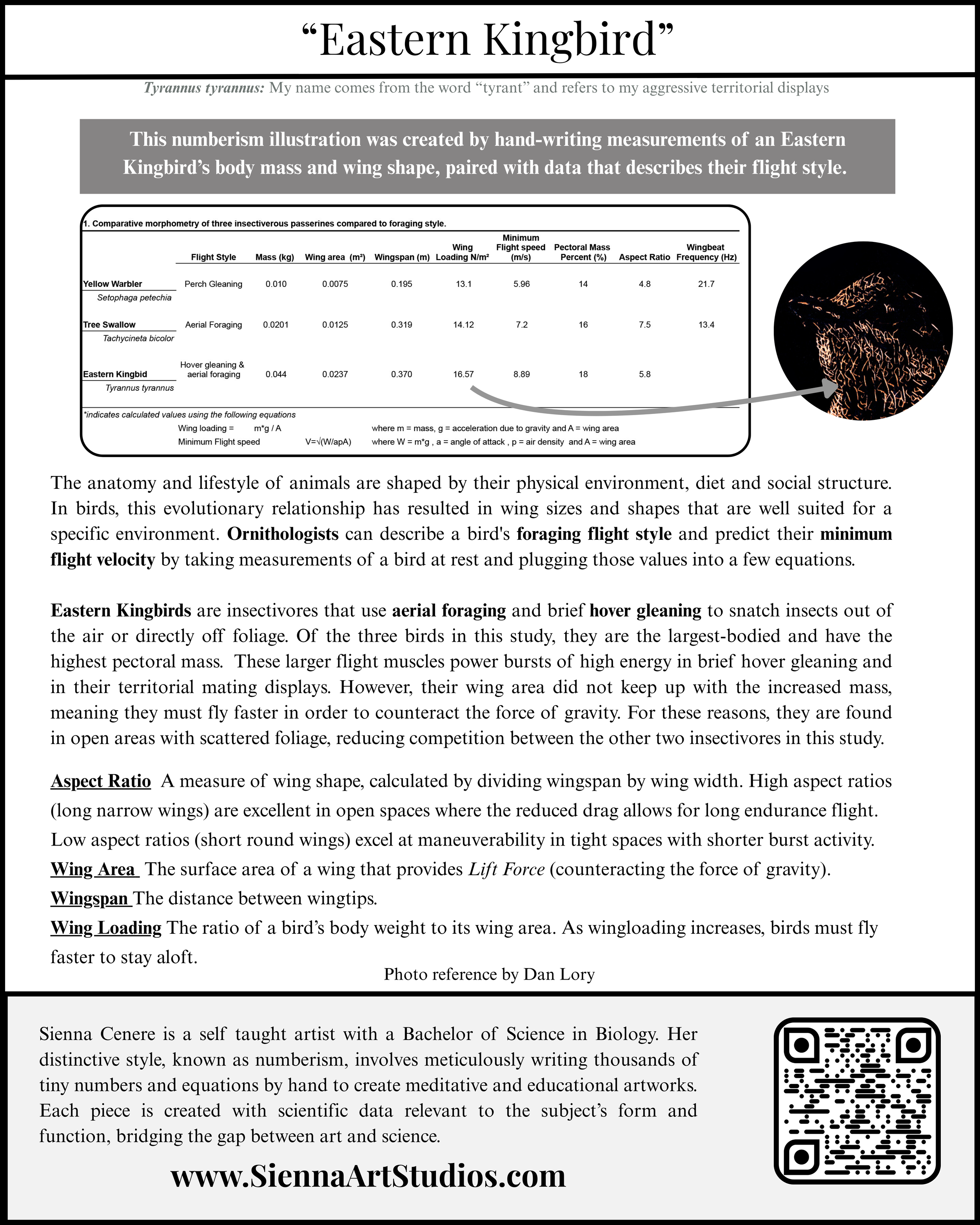
This Eastern Kingbird was drawn with anatomical measurements that correspond to their flight and foraging style. It is one of three in a comparative analysis of insectivorous bird flight.
Scroll down for a very thorough and delightfully nerdy description.
Original engraving on copper plate is sold.
Inspired by research and a love of wild spaces “Form & Function” sparks an appreciation for the diversity and vulnerability of the natural world through the union of art and scientific exploration. This mathematically informed series celebrates the beauty of nature through a collection of hand engraved Numberism illustrations on oil painted copper, aluminum and brass. These pieces were created by scratching thousands of tiny meaningful numbers and equations with fine blades. From the recursive fractal branching of trees to the biomechanics of avian flight, these illustrations are drawn with data that reveal how anatomy and physics shape the living world.
The heart of this collection features three insectivorous songbirds, the Yellow Warbler, Tree Swallow, and Eastern Kingbird, and asks the question:
“How does wing shape and body size influence the ecological niche of birds? ”
Though these birds share a common diet of insects, their foraging styles differ dramatically. These unique flight styles are coded into their bodies in measurable traits such as wingspan, wing area, aspect ratio and body mass. By measuring and comparing these differences, an anatomical origin of behavior starts to emerge!
The elliptical wings and small body mass of Yellow Warblers makes them adept at maneuvering through dense forests at low speeds, where they land on branches to pick larva and adult insects directly off of leaves. The Tree Swallow is an aerial forager, catching mature prey mid air with impressive agility and endurance, rarely stopping to rest. Their high aspect ratio wings and streamlined body reduces drag, enabling them to fly for long uninterrupted periods, however to stay aloft they must fly faster. The Eastern Kingbird, a hover gleaner and sally hawker, uses larger pectoral flight muscles to briefly hover and snatch prey from the air or from foliage.
From a distance these differences may seem subtle, and their habitat interchangeable provided there are insects present. However, when we take the time to look closely it becomes clear that they have evolved for very specialized little corners of the world, and when those areas are lost, they are ill equipped to switch to their neighbors territory.
Reference photos by Glen Noyer and Dan Lory.
Wing Loading: The ratio of a bird’s body weight to its wing area (g/cm²). As wingloading increases, birds must fly faster to maintain lift.
Aspect Ratio: A measure of wing shape, calculated by dividing wingspan by wing width. High aspect ratios (long, narrow wings) are efficient for sustained flight with minimal drag while low aspect ratios (shorter, rounded wings) are excel at maneuverability in tight spaces.
Pectoral Mass Percent The mass of the flight muscles (Pectoralis and Suprocoracoideus) relative to its body weight. A higher value correlates with increased power output.
Paper prints are printed on fine art luster paper and are under an archival mat, perfect for beautiful framing.
The 11" x 14" with mat is 16" x 20"
The 16" x 20" with mat is 20" x 24"